Showing posts with label blog. Show all posts

Thursday, 27 November 2025

How a German PoW found a life-long friendship in Devon

BBC News published an article last year about a friendship between a German solider and a couple from Devon has kept two families in touch for almost 80 years.

Bruno Pannhausen was captured in Normandy in 1944 and detained in a prisoner of war camp in Tiverton. After the war, he was offered hospitality by Tony Langworthy who lived nearby, and they would go on to be life-long friends. Their present-day relatives now hope the remarkable story will be kept alive and passed down to future generations.

Bruno Pannhausen was a prisoner of war at a camp in Tiverton


Tuesday, 8 October 2024

Behind the scenes at the Grade I-listed Tiverton Castle

Devon Life published an article on "Behind the scenes at the Grade I-listed Tiverton Castle" in October 2023.

The castle was built in 1106 by Richard de Redvers on the orders of Henry I. The de Redvers became the first Norman Earls of Devon and were succeeded by the Courtenays, one of whom married Princess Katherine Plantagenet, favourite aunt of Henry VIII.

Monday, 30 September 2024

Newte Library Reopening

The Newte Library at St Peter's Church was formally re-opened on 29 September 2024 following completion of the new mezzanine level. Many of the books are very fragile, so appointments can be made by email to look at them in more detail.

The Newte Library of St Peter’s Church in Tiverton was founded in 1716 from the private library of Reverend John Newte. Notable items include a late 15th-century illuminated Book of Hours and annotated political pamphlets from the 17th century, reflecting John Newte's royalist leanings. It also contains a collection of books primarily focused on divinity, including bibles in ancient languages, sermons, including one published by Newte himself, and works of the church fathers.

The library's significance lies in its historical context, offering insights into the religious and political landscape of the 17th and 18th centuries. It also provides rare evidence of the reading habits during the early modern period.
Newte Library Tiverton History Books

Newte Library Bookshelf

Book of Hours, mid-15th Century

Wednesday, 17 April 2024

One Magazine

Please note that I have removed all One Magazine Tiverton Museum article links as the files have been removed from their server.

Wednesday, 8 November 2023

Horrid Murder of a Gamekeeper by Poachers

From GENUKI provided by Lindsey Withers:

North Devon Journal, Thursday 7 February 1839 - The greatest excitement has prevailed in the town and neighbourhood of Tiverton since Sunday morning, when at an early hour, reports were in circulation that a most ferocious murder had been perpetrated by poachers, and that a man called COTTRELL, an assistant gamekeeper of Thomas Daniel, Esq., (late an Alderman of Bristol) who possesses large estates in the neighbourhood of Tiverton, was the unfortunate victim. Various reports being in circulation, we felt it our duty to repair to the spot in order to obtain the most accurate information. We reached Tiverton yesterday (Thursday) about half past twelve o'clock, and found the inhabitants still in a state of much terror and anxiety in consequence of such a shocking occurrence having happened in their neighbourhood. We learnt that the Coroner's Jury had already sat upon the body, and pronounced their verdict of "Wilful Murder" against one of the poachers, Aaron Hagley, a husbandman of that neighbourhood, and two others, Thomas Hagley, and Matthew Maslen, as aiding and assisting.

In the course of our inquiries we learnt that, in consequence of repeated depredations having been committed on Mr Daniel's manors by the destruction of his game, - the alarm of persons residing on the estates from the discharge of fire-arms in the dead of the night, - and the breaking down of the fences, and other damage done to property, - the agents of the hon. gentleman felt it their duty to have a strong watch distributed, in order to detect, if possible, some of the offenders. Accordingly, on Saturday night two parties were organized: one consisting of the regular keepers and two assistants, (denominated watchers); and the other composed of three assistants. They were to take different routes, and proceeded accordingly: when at midnight, between the hours of twelve and one, the party of assistant keepers heard the report of guns. They made away in the direction of the sound, and soon discovered three poachers in the plantation. The poachers on finding they were pursued closely, turned and walked backward, two of them armed with bludgeons and one of them having a gun, which he presented in threatening attitude towards the faces of the watchers. On coming into a large field, adjoining the plantation, the poachers endeavoured to escape, but the watchers still followed them up, and they made off towards the old Bampton-road, on which they traversed a short distance; they changed their route, and went back towards Palfrey's farm; here they altered their line again, and came out in the old Bampton road, near Longshayne, about three miles and a half from Tiverton. They came on till they reached Knightshayes, when the deceased ordered one of the assistants to call the gamekeeper of Knightshayes for help; the poachers then went down over the hill as fast as they could, the deceased and the other watcher closely following them till they came to the bottom of the hill, when they crossed a large field towards Chetiscombe. From thence they went down a lane and got into Gaddle estate, crossing the town leat, and turned a little to the right over a stile: here one of the poachers struck COTTRELL in the head with his stick, but no blows were returned by him: they advanced a few paces further, when the man having a gun presented it towards COTTRELL, and with an oath said he would blow his brains out, and instantly fired; COTTRELL fell backwards, and died in a moment! - the murderers immediately ran off. In the corner of the field is a stile, over which the poachers and watchers came: about twenty paces from the stile is a portion of turned-up earth, upon which the blood of the unfortunate victim is still to be seen, as if "crying from the ground". Hundreds of the inhabitants have been on the spot to view the crimson relics, and many have carried away portions of earth and grass as sad mementos of this dire calamity. Full particulars of this frightful tragedy will be found in the evidence taken at the Inquest which we shall subjoin. It may be observed that, in the speedy detection and capture of the murderer and his partners in crime, the hand of providence is most remarkably to be traced. The surviving watcher, after capturing the body of his murdered companion, being single-handed, and without any chance of securing them, did not at once pursue the murderous gang, but made his way to Tiverton, when he first called on a man named Venn, the groom of Mr T. P. Wright, steward to Mr Daniel; he then proceeded with Venn, to Mr Wright's house, and rang the bell: whilst waiting there Aaron Hagley was observed by the watcher coming over Exe Bridge, near Mr Wright's residence, when he immediately exclaimed to Venn, "That's the man that shot JACOB COTTRELL. I know him by his walk." On Hagley coming nearer, he said, "I'll swear to him: he has a dark patch on his breeches:" and upon lifting the flat of his coat the patch showed itself. Hagley was then secured, and safely lodged in the Bridewell. He underwent a private examination before the magistrates on Sunday, when circumstances came out which led to the speedy detection of his companions: one of whom, it is currently reported, has made a confession of the whole of the circumstances; - we do not, however, vouch for the truth of this.

The unfortunate deceased was a fine athletic man, about five feet ten inches in height, of open countenance. He was much respected in his station, and has left a widow (who is far advanced with child), and four children. After the fatal wound had been received, the body was taken to Guddle, and from thence to the 'Royal Oak' inn, Newport street, Tiverton, kept by Mr Parkin, where it still remains in the coffin. Mr Macdonald, surgeon, was, as we are told, first called, after the body was brought to Tiverton, but that gentleman was not summoned to give his evidence on the Inquest. the charge of the shot, which appears to have been heavy, entered just over the left eye, perforating the lobe of the brain; a portion of it lodged in the head, being arrested by the bone flattening some of the shot: the rest of the charge went through the head, as is evident from the state of the back part of it. We hear that Mr Macdonald has since opened and thoroughly examined the head of the deceased, by authority.

The prisoner, Aaron Hagley, is a man about five feet seven inches in height; coarse brown hair: dark eyes: countenance somewhat contracted, but without marked signs of ferocity. He has altogether the appearance of a [?] labouring man.

THE INQUEST. - The Inquest was held in the Town Hall, Tiverton, before F. S. Gervis, Coroner, when the following respectable gentlemen were sworn in Jurors:- J. Beedell, Esq., Foreman. R. Lawson, Esq.; Capt Hodges; T. L. T. Rendell, Esq.; Mr Wm. Hodge: Mr Trix; Mr Chapple; Mr Goodland; Mr W. Melhuish; Mr Willis; Mr Sanders; Mr Steele; Mr Risdon; Mr Ellerton; Mr T. G. Beedell; Mr Eastbrook; Mr G. Voisey; Mr Kemp; Mr F. Pratt; Mr Sharland; Mr Merson.

The Jury met at six o'clock in the evening of Tuesday. After the Jurymen had been sworn, they went to view the body, (lying in the 'Royal Oak Inn,') and then returned to the Town Hall, when the Coroner adjourned the Inquest till Wednesday morning at 9 o'clock. The Coroner said, that it had been thought advisable to hold the Inquest privately; as, owing to the great excitement, business might be impeded; and he therefore announced that, by the authority he possessed, the public would not be permitted.

Wednesday Morning:- The Jury assembled, according to appointment, at 9 o'clock, and several of the Magistrates were present to assist.

James Bowerman sworn: examined by Mr Patch: lives at Coombland, in Tiverton; is a husbandman in the employ of Mr Daniel. On Saturday evening, the 26th, he was ordered by Mr Daniel's keeper, James Vincent, to meet William Winter and Jacob Cottrell (deceased) by the side of the Chapel path on Fairby manor, the property of Thomas Daniel, Esq.; he went accordingly: he went for the purpose of taking poachers, or any others disturbing the covers by night; they met at 8 o'clock: remained watching until five minutes past one on Sunday morning, when they heard a gun fired; it was a fine moonlight night. They then removed further down the plantation to a place called Brushford's close: hid themselves by the side of a wood rick, watching: heard a report, as of two guns close together, at two o'clock by his watch; remained on the same spot about half an hour; they then heard another gun fired; made their way as quick as possible to Poat's Close, where they thought the gun was fired: just before they came to the place, saw a man hide behind a bush; they all ran together as quickly as possible. At about the distance of five cloth yards they saw two others, all coming towards them, who ran a little way and then stopped; they discovered that one had a gun, and the others sticks, more than a foot long, with very large heads; witness and Winter had walking sticks, and COTTRELL had a pitchfork; when they stopped, the man having the gun presented it at them and said, "he would blow their brains out;" and the other two on each side said "Fire, fire!" They were then at the distance of four cloth yards from us; this was in the path, which is wide enough for a slide or cart to pass. It was light enough for us to discover the dress of the men. We then asked their names, and what business they had there? One replied that they had got tipsey in the night, and had gone out of their path. We asked them what they had a gun for at this time of Sunday morning: replied he had been to some place after it, and was going to carry it home. They then made their way out of the plantation towards Chapel path; and came to a plantation called Long Break: by this time the light was sufficient to enable them particularly to describe their dress. The man with the gun walked backwards, pointing it at them; he had an old-fashioned jacket one, much torn in the left shirt, there seemed to be something heavy in the pocket, which [?] it weigh down about the size of a bird:0 also [?] [?] small clothes much pieced and fustian leggings, [?] at the bottom; could not observe the face of the man with the gun, as he held it down; he had a hat on [?] torn, and the brims hanging down over his face, and [?] who the [?] was. One of the other men with a [?] but [?] a fustian jacket in pretty good condition, [?] small clothes, with a dark patch on the right thigh, red cravat, and a black hat. Knows Aaron Hagley; has known him 3 or 4 years when he lived at Mr Webber's at Coombland, had suspicion it was he by his walk, but could not see his face, as he kept his arm over it when he looked towards them; and the other man with a stick, wore a dark fustian jacket, corded trowsers, and was a thin man of pale complexion; observed that his cheek bones were remarkably prominent; had a good view of his face; the man with the gun was upwards of five feet, and appeared to be 35 or 40 years of age; the second, whom he thought to be A. Hagley, appeared to be about the same height: the third man was taller. When we came to Long Break, the pale-faced man turned round and struck me on the head with the stick: I did not say anything to him or strike him, they all went on together through the plantation to Palfrey's lane; they went some distance down the lane till they came to a gate; and then turned into Mr Roberts's grounds; they went into afield towards Hewing's farm; we followed close; they retreated towards the old Bampton turnpike road, and came again into Palfrey's lane, then into the road near Long Hayne; had some conversation with one of them as we went on. We asked their names; they asked why we wanted their names in particular: we told our names upon their asking; they said "Keep back, keep your distance," several times. They went on the turnpike road to the cottages of Mr Dickinson's gamekeeper, and we followed: I told Winter to call Mr D's keeper to help to take the men into custody: I said it loud enough for the men to hear. Winter went away, the three men ran fast down the turnpike road, until they came to a large ploughed field belonging to Mrs Poole, of Chetiscombe. I and COTTRELL followed close by the bottom of the field: we went over a gate into a narrow muddy lane, in one part of which there is a pit nearly knee-deep, through which we were obliged to go; we came out into a lane leading from Tiverton Chetiscombe: they crossed the lane into a moory plot on the left hand side, coming from Tiverton. We hallooed several times to Winter to come on: they went into a field, crossed the town leat, and turned a little to the right, over a pair of bars or stile, the man with the gun and another first, the other followed: I and COTTRELL went over the same bars. Winter was not come up: the best dressed man struck COTTRELL on the head with his stick as he was getting over the bars; no blows were returned, neither here or through the whole of the affair, nor any insult offered in any way; after the man struck COTTRELL, he went on and joined the others; we walked rather wider apart after we crossed the bars, COTTRELL was on my right side, I was rather nearer to the men than he was; I was about two land rods or ten paces distance from them, and about one from COTTRELL; when we came over the gate I observed the gun was in the hands of the person whom I supposed to be Aaron Hagley: I saw the man level the gun at JACOB COTTRELL, observing at the time, "I'm d--d if I don't blow his brains out," and then fired: COTTRELL fell; I did not hear any remark made by either of the others, nor did they do anything to prevent it, they were close together; they ran on towards Mr Chapple's without making any remark. I followed as nearly as I can say about 10 or 12 yards: I was afraid to go further, and returned to COTTRELL; he lay flat on his back; he was quite dead, bleeding much, his face was covered with blood; the moon was not so bright then; I went to meet Winter. I met him in the field adjoining; I looked at my watch and found it quarter past four o'clock; I told Winter that COTTRELL was killed, and we both went to get assistance to Mrs Poole's, Chetiscombe: we procured the assistance of the servant man; he went back with me to the place: we got a pig's ladder, and other persons came; we carried the body into Guddle Court, and left it there with the men, while I and Winter came on to Tiverton as quickly as we could. We called at James Venn's in Bampton street, the town clocks were striking five; Venn got up and came down; I told him what had happened, and he went with me to Mr Wright's near Exe bridge. Mr Wright acts as Mr Daniel's steward. Venn rang the bell and knocked, and Mr Wright appeared at the window; we were about 7 or 8 minutes at the door. While we were at the door, we saw a man coming over the bridge towards us; Venn said he thought the keeper was coming; I said I thought Wm. Webber, a man who works on the manor: Winter said "that is one of the men we saw in the cover." He was coming down the middle of the road; as he came nearer, he drew off towards the gutter on the other side of the street. When he was nearly opposite, I said "that is the man who killed JACOB COTTRELL." Then Venn ran and caught him: I also took him by the collar: he made no resistance. I knew him by his dress and walk; I observed him particularly, and did not speak to Venn till he was rather passed me; his walk is heavy and slow: I recognised him as Aaron Hagley; I am certain he was the man who fired the gun and killed COTTRELL; we were quite sober and Hagley appeared to be same. Mr Wright came down and opened the door. Venn told him that one of his men had been killed, and that we had got one of the men who had done it. Did not observe that Hagley made any reply; went into Mr Wright's kitchen; we examined Hagley's leggings, they looked very wet, and appeared as if the mud had been wiped off with straw or grass; Mr Wright sent Venn to get a constable; we remained there about ten minutes; a constable came shortly after, and took him away; I have seen the other two men at the police office in Tiverton; one of them I recognised to be the man who struck me and COTTRELL, as before named: his name is Matthew Maslen; the other I recognised to be Thomas Hagley, who carried the gun in the plantation before I saw it in Aaron Hagley's hands. I am certain they were the men; Maslen had on the same jacket, but not the same trowsers as before. Thomas Hagley had on a different hat, small clothes and gaiters, his jacket was the same.

By a Juror.- Aaron Hagley had apparently neither gun nor stick when taken. I learnt the names of these two while at the office.

W. Winter, a husbandman in the employ of Mr Styling, at Fire Beacon estate, in Tiverton parish, examined by Mr Patch. - On Saturday night last, was in a plantation called Pont's Close, with COTTRELL and Bowerman; we met at the Chapel path, on Mr Daniel's property; am employed by Vincent to watch poachers. (The evidence same as the other in the material point.) I followed with the others as described by James Bowerman, till we came to Mr Dickinson's cottage, and there left them, for the purpose of procuring assistance. I had sufficient opportunity of observing their dress; the man who had the gun had on an old fustian jacket, town on the left side; the pocket hung very heavily: he had an old rusty hat on, the brim hanging down over his face: corded light small clothes much patched, leggings torn at the bottom. I thought his face was rather dark; could not see more of his face than Bowerman: one of the men with the stick had on a light fustian jacket, tolerable good, light corded small clothes, with a dark piece on the right thigh, a red waistcoat, black hat (pretty good), had on leggings or gaiters. The third man, who also had a stick, was dressed very neatly, in a dark fustian jacket, I saw his face; had very high cheek bones, sunken cheeks, thin, and of pale complexion; very good black hat, corded trowsers; he appeared to be the tallest of them; I went to the cottage for assistance, but could not get any, not being able to make any person hear; staid only a few minutes, and went after my party, who were out of sight. I went into the turnpike road towards Tiverton; passed a ploughed field on the left hand side: I hallooed, and my party answered; I then turned and went in through the bottom of the ploughed field into a muddy lane; before I came into the muddy lane, I heard a gun fired; I went in that direction, and met James Bowerman coming towards me. I went with him into the next field, and saw COTTRELL lying on the ground dead, his face was covered with blood. I could not see where the blood came from; I went with Bowerman to Chetiscombe and procured assistance; we then took the body to Cuddle Court; then went with Bowerman to Tiverton. No insult was offered by our party. (Then followed a recapitulation of the evidence given by the former witness.) When he (Hagley) came nearly opposite, I said, "That is one of the men we followed," and Bowerman said it was the man who shot COTTRELL; he knew him from his dress. Venn went and took him. I did not hear anything said by him. Venn told Mr Wright that one of his men was murdered, and they had got the man who had done it. I saw a man strike James Bowerman on the plantation; one of the men I saw in the police office,; he was a thin faced man, was called Matthew Maslen. I knew Thomas Hagley by his jacket, size, and sound of his voice; his face was dark like the person I saw in the plantation; sometimes were close to the poachers, not a cloth yard distant at times. I never knew of any ill-will between Aaron Hagley and J. COTTRELL.

James Venn, examined by Mr Patch. - I am an occasional servant of Mr Wright; I was called on Sunday morning last just before the clock struck five, by James Bowerman: I looked out of the window and asked him what was the matter. In consequence of what he told me, I got up and dressed myself as soon as I could, and found Bowerman and Winter at the door; I went with them to Mr Wright's house; Mr Wright looked out of the window; I waited at the door, close to the gutter. I saw a man coming at a fast walk over the bridge towards us. I said "Vincent is coming, James." Bowerman and Winter were standing in the recess of the door. Bowerman put out his head and said, "No, it's not Will. Webber:" I said, "No, it's not Will. Webber, he does not walk like him. Be who it will, I will see who it is." He was walking on the off side of the street in the roadway. As he came towards us, he altered his pace very much, and walked very slowly indeed; as he came nearer to me, Bowerman went over to him, and spoke to him. He and Winter said, "That is one of the party." The man passed on a few yards, when Bowerman said, "That's the man that shot COTTRELL." I then ran across the street and took him by the collar: I looked in his face, and immediately recognised him. I said "Is that you, Hagley? how came you here this time of the morning?" He said he had been to Bickleigh, and came round by Batterleigh. I said, "You are the man we want." He seemed to draw very much from me, and I pulled him about. He cursed me, and said, "I have not killed a bird for the season, nor shot off a gun." Bowerman then took hold of his collar on the other side. When Mr Wright came out, he asked what was the matter; I said, "One of your men is killed, and we have got the rogue that did it." Mr Wright then brought a light. Bowerman said, "if that's the man, he has got a dark patch on his breeches." We took him into the kitchen, and asked him how he came so dirty, but he made no reply; the patch was above the knee, on the right side on the back part; his jacket was buttoned, and the patch could not be so well seen, but it was very visible when the coat was unbuttoned. Mr Wright then desired me to go for Perkins the constable, which I did; he came with me; we took the man to Bridewell; he had on a red cravat, but neither gun, game, nor stick with him.

Joseph Perkins, examined by Mr patch. - I am a constable of the borough of Tiverton; I was called by James Venn on Monday morning, a little before 6 o'clock. Went with him to Mr Wright's house in Bridge street, Tiverton; went into the kitchen; Mr W. said to me, "Here is a man whom you must take and put in prison;" there were three men there, strangers to me; I said, "Which of the men is it?" Mr Wright said, "That is the one," pointing to one on my left hand; I then took him to Bridewell; said nothing to him, nor he to me while going to the Bridewell: when there, I asked his name, he said "Aaron Hagley;" I said, "You are very wet and muddy, where do you come from?" he said he had come from his cousin's at Bickleigh, up through Boxwood; I asked him his cousin's name, he said it was Jacob Hagley; the jailer and myself searched him; in the waistcoat pocket was a box of lucifer matches; I asked him what he had done with them, as they looked quite new? he said he had bought them last night to light his pipe, at Henry Gould's on the Leat; I said, "How came you up Boxwood?" he said he bought the matches about 8 o'clock on Saturday night and went from thence to Bickleigh, and came up Boxwood on Sunday morning. I left him and went to Mr Wright's again, who desired that I would accompany Mr Macdonald, surgeon, to Guddle, to see the man that was killed; I did so; it was about 7 in the morning. When I got to Guddle, I saw the man laid on the pig's ladder, his face covered with blood; I perceived the left eye was knocked in; I considered the greatest part of the charge went into the eye; there were marks of several small shot about the forehead; the body was warm when I came: Mr Macdonald put his fore-finger about 2 ¼ inches into the socket; Mr M. and I then left. On Sunday afternoon I had the warrant to go to Templeton to apprehend Samuel Hagley. Before I started I went to Bowerman and Winter to get descriptions of the persons of the two others; I then went to Templeton, but could not find Samuel Hagley at Thomas Hagley's house, where he lodged; I saw Thomas Hagley, who said he did not know where Sam was; I went to an adjoining house, which was Maslen's, and saw Maslen, though I did not then know him; but his dress and appearance, as well as that of Thomas Hagley, struck me as being very much like the descriptions given by Bowerman and Winter; I then returned to Tiverton, and on Monday morning obtained a warrant against Thomas Hagley and Matthew Maslen; I then went to Templeton; Wood (who had a warrant to apprehend George Hagley) accompanied me. Coming near Mr Chichester's house, I aid to Wood, "Let us go to Aaron Hagley's House, perhaps we may hear something about them:" on entering the house I saw a man sitting smoking his pipe in the corner, who turned out to be George Hagley. Wood apprehended him; I found a gun under a furze faggot loaded with shot and slugs, thence I went to Templeton, and apprehended Thomas Hagley and Matthew Maslen; I first took Thomas Hagley in his own house, he had a ragged fustian jacket, breeches and leggings, the same that he had on the previous day when I saw him; I said to him, "You must go to Tiverton with me; if you go quietly I shall not hand-bolt you, if not I shall;" he trembled very much; I left him in custody of Venn, and went to Maslen's house, and told him he must go to Tiverton with me; his countenance altered, and he trembled much; he had on a velveteen jacket; I told him to put on his fustian jacket, and the boots that I saw lying by, and which on the Sunday I had observed to be very dirty; I went up stairs and found a very good fustian jacket, which I brought down and told him to put on; there was a pair of corded trousers hung on a rail, dirty, and darkish corded leggings, which were particularly dirty at the lower part of the legs; I told him to put on the clothes he had on, on Sunday, which he did; I then brought Thomas Hagley and Matthew Maslen to Tiverton to the police office. At Thomas's house I noticed a gun on Sunday night over the chimney piece; it was a flint lock; I observed on Sunday, that it had been very recently discharged, as there were marks of powder on the lock; On Monday it was cleaned; it belonged to Thomas Hagley.

Matthew Wreford, examined by Mr Patch. - I am a butcher living in Bampton street, in this town; I keep a shop and have license to sell game. On Saturday evening last on my return from market, I found four men in my house, it was about nine o'clock; these were Aaron Hagley, Thomas Hagley, and Samuel Hagley; I did not know the name of the other; at the time I saw him at the police office on Monday, he answered to the name of Matthew Maslen; they told me that they came to buy some bacon, but I had none; they purchased some hog's pudding, they remained in the house about half an hour after I came in, they had some ale to drink in my house, and ate the hog's pudding. I saw the barrel of a gun on the table; I believe it was a single barrel; I think to the best of my knowledge it was Tom who put the barrel in his pocket; all their pockets seemed full, but the impression on my mind was that Tom Hagley had a stock of a gun in his pocket; the barrel was a short one, about two feet long; did not see the stock I saw a little bag in the possession of Tom: can't say what was in it; it was something heavy, a little bigger than an egg, he put it in his waistcoat pocket. By a Juror: I gave them the ale; they left the house altogether, I have seen them before, I have sold them meat; I have seen Samuel Hagley, Thomas Hagley and Matthew Maslen; I have seen Aaron's wife; she came to my house Sunday morning about 9 o'clock; she asked if her husband was at my house last night.

Samuel Hagley, examined by Mr Patch. - I am a labourer, and quarter with Thomas Hagley, who lives at Lagg, in the parish of Templeton: on Saturday evening I heard that Thomas Hagley and Matthew Maslen were coming to Tiverton to buy salt; Thomas is no relation of mine. I called at my brother's house (Aaron Hagley), we came into Tiverton about eight o'clock, Aaron bought in my presence a box of lucifers, at Henry Gould's: after he went to Mr Wreford's in Bampton street, the game seller; we went in together and found Thomas Hagley and Matthew Maslen there when we went in. I have been at Wreford's and met all there before, it was understood that we were to meet at Wreford's on that evening. There were two guns in the company; I carried the percussion gun; there was only one produced at Wreford's; it was the one I had; we had something to eat and drink at Wreford's; we left Wreford's house about ten o'clock; part of what we had was paid for by Aaron Hagley. Aaron and Maslen went first out of the house; I went next, and Thomas next; went up Bampton street to the Castle gate. We were all four together at the Castle gate; we went to Bolham village, and on the road (passing butcher Newton's house) more than three miles, and then we turned up a wood on the right hand side; had no dogs with us; I remained with them until twelve o'clock. We went through woods and fields and plantations. I had a gun with me during that time; so had Thomas Hagley: the gun produced is the one I carried; (same as before, the percussion one;) I left them between twelve and one o'clock; I left them because I was by myself, and heard someone say "Come on, come on." I thought then it was time for me to be off; I was about thirty or forty yards from the others; I thought it was a strange voice I heard; it was a strange signal to me; before I left, there was a gun fired by my party; it was fired a few minutes before I left; about a half an hour before this, both guns were fired off quicker than a double-barrel gun could be fired. The gun last fired was fired by Thomas Hagley; when I left, I took my gun with me; we fired at birds; I went across the bottom away towards Ewing's; before I came to this place I heard a voice say, "Come on;" I went through the court, across the Cove chapel, thence to Cove bridge; and went down the lane to Hamesford, until I came to Little Hatswell; I remained in a linhay at Hatswell until daylight; went thence to Lurleigh to my brother Aaron's house; I took my gun with me there, and left it in the cupboard, where it was taken from; it was loaded but no cap on it; the gun belonged to Aaron; I know that Thomas Hagley has a flint gun, but am not certain of the gun produced so that I can swear to it. I think it the same. I left Aaron's on Sunday evening, about four o'clock, and slept at Whitnoll, Stoodley parish.

About twenty minutes after 8 o'clock on Wednesday evening, the Coroner summed up the evidence. The Jury afterwards retired to consider their verdict, and found Aaron Hagley guilty of "Wilful Murder," and Thomas Hagley and Matthew Maslen guilty, as there and then aiding and assisting. The Jury was then adjourned till this day (Friday) two o'clock for the purpose of giving time to complete the document.

The prisoners were removed to the Devon County Gaol.

Tuesday, 3 May 2022

Members of Parliament for Tiverton Since 1885

Here is a summary of the elected members for Tiverton each year since the 1885 general election, following the Redistribution of Seats Act 1885 when Tiverton was reduced from two members to one, and the Representation of the People Act 1884 which widened the suffrage.

* = General election
† = By-election

YearMemberParty
1885*Sir William WalrondConservative
1886*†
1887
1888
1889
1890
1891
1892*
1893
1894
1895*
1896
1897
1898
1899
1900*
1901
1902
1903
1904
1905
1906*Hon. William WalrondConservative
1907
1908
1909
1910*
1911
1912
1913
1914
1915Charles CarewConservative
1916
1917
1918*
1919
1920
1921
1922*Herbert SparkesConservative
1923*†Sir Francis Dyke Acland, BtLiberal
1924*Gilbert Acland-TroyteConservative
1925
1926
1927
1928
1929*
1930
1931*
1932
1933
1934
1935*
1936
1937
1938
1939
1940
1941
1942
1943
1944
1945*Derick Heathcoat-AmoryConservative
1946
1947
1948
1949
1950*
1951*
1952
1953
1954
1955*
1956
1957
1958
1959*
1960Robin Maxwell-HyslopConservative
1961
1962
1963
1964*
1965
1966*
1967
1968
1969
1970*
1971
1972
1973
1974*
1975
1976
1977
1978
1979*
1980
1981
1982
1983*
1984
1985
1986
1987*
1988
1989
1990
1991
1992*Angela BrowningConservative
1993
1994
1995
1996
1997*
1998
1999
2000
2001*
2002
2003
2004
2005*
2006
2007
2008
2009
2010*Neil ParishConservative
2011
2012
2013
2014
2015*
2016
2017*
2018
2019*
2020
2021
2022Richard FoordLiberal Democrats

27/06/2022 Update: LibDem win noted at the recent by-election.

Friday, 5 November 2021

Buscombe: Or, A Michaelmas Goose

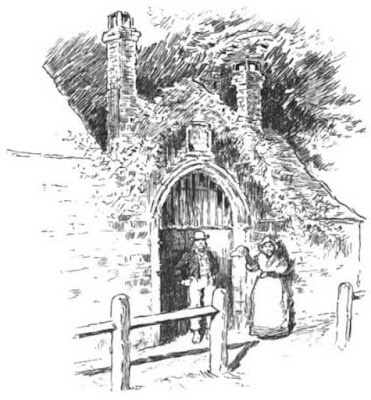
Illustration from Harper's Magazine of Buscombe: Or, A Michaelmas Goose
Illustration from Harper's Magazine - 1889

In the December 1889 edition of Harper's Magazine is the R.D. Blackmore tale in verse Buscombe: Or, A Michaelmas Goose. The illustration above from the magazine is instantly recognisable as the entrance to old Blundell's, shown below.

In 2020, local author and publisher, Douglas Rice, published a new edition of the tale, as reported by In Your Area.

Friday, 22 October 2021

Hensleigh

From Harding, vol. II (1847) on page 125:

Hensleigh is in Clare portion and was probably named after Robert Hensleigh, who had lands in Tiverton in Henry the 8th's time, and was held under Henry Courtenay, Marquis of Exeter, who was Lord of the manor. It afterwards became the property of the Burridges, and Samuel Burridge, Esq., held it in 1724; from his descendants it passed into the hands of J. B. Cholwich, Esq., whose mother was a Burridge. He married a sister of the late Sir John Duntze, Bart., and on his death he left this property to his nephew the present Sir John Duntze, Bart.; whose uncle, the late James Duntze, Esq., had a life interest in the house.

Tuesday, 19 October 2021

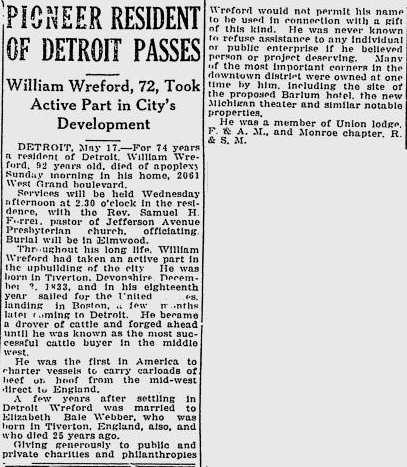
William Wreford of Detroit

From the Canadian newspaper the Border Cities Star from 17 May 1926 regarding the death of Tiverton born Detroit resident William Wreford. It mentions his reputation as the most successful cattle buyer in the midwest, his philanthropy, and his contribution to the development of Detroit. He owned blocks of the city that later became the Barlum Hotel and the Michigan Theatre. The obituary also mentions his wife, Elizabeth Bale Webber, who was also born in Tiverton. They are buried in Detroit.

Border Cities Star article from 17 May 1926
Border Cities Star article - 1926


Monday, 18 October 2021

Married at First Sight

Not directly related to Tiverton per se, but from the Tiverton Gazette as quoted in a book by Tiverton author Sarah Hewett. From page 179 of Nummits and Crummits:

ROMANTIC INCIDENT IN A WEST-COUNTRY WORKHOUSE.

THE workhouse at Taunton has been the scene of a romantic incident. On October 13th, 188?, a middle-aged man belonging to a neighbouring parish, arrived at the workhouse, his object being to find a housekeeper. Seeing the master, he said he had just lost his wife, and was in an awkward fix, as he had a situation and a cottage, but no one to cook his "grub." At the time of the conversation an inmate of the house, a widow, who had been allowed to store her furniture in an outhouse at the Union, was scrubbing the dining-hall floor, and to her the master put the question: "Would she like to interview the man with the view of becoming his housekeeper?" An affirmative answer was readily given, and the couple were left alone to settle the terms of the engagement. At the end of a half-an-hour, they requested the attendance of the master, who found them addressing each other familiarly as Willie and Annie. They asked him to draw up an agreement, setting forth that Willie would support Annie and her two children in return for her services as housekeeper. To please them the master complied, and Willie and Annie at once attached their signatures. Then in the presence of the woman, Willie, addressing the master, confessed to having a liking for Annie, and after much coy beating about the bush, he unbosomed himself, thus: "Well, ef 'er's aminded I'll go down an' gie notice to git married zo zoon's can be." With the hesitation of etiquette the engaged housekeeper, who, in a business-like fashion, had pocketed the agreement, said she would like to have until Monday to consider the proposal. After affectionately embracing the lovers parted. On Saturday, the object of this spontaneous passion, took to the master of the house a letter which she had received from Willie, and which was so affectionately worded that it might well be termed a love-letter. On Monday, Annie having consented, the couple and the two children drove off in a wagon, which Willie had brought for the purpose, the woman's furniture being taken away in the same conveyance. Before leaving, they thanked the master very warmly and intimated that they were going to be married without delay.

From Tiverton Gazette.

Thursday, 9 September 2021

The Crow Hill Spectre

A reference to Tiverton in the Evening Times from 5 January 1980 caught my eye. The article is about a ghost haunting Crow Hill Cottage, occupied by a tenant called Gerald Hawkins. The cottage is described as being "remote" and "near Tiverton". Although it says the cottage fell into disrepair from 1933, I can find no historical reference to a cottage of that name in the Tiverton area. And why did the story resurface in a Glasgow based newspaper in the 1980s?

Thursday, 19 August 2021

The Storming of Tiverton Castle

An account of the storming of Tiverton Castle in 1645 from the 1870 book A Life of the Great Lord Fairfax, Commander-in-chief of the Army of the Parliament of England by Clements Robert Markham, on page 255:

The general's object was to confine Goring to the right bank of the Exe, and for this purpose it was first necessary to capture the town and castle of Tiverton. Massey was sent to summon the garrison, which was commanded by Sir Gilbert Talbot, a cavalier notorious for cheating at bowls and cards. At about noon on October 18 Fairfax arrived in person, with about 6,000, men having left detachments at Silverton and Colomb John. Talbot refused to surrender; so the general held a council of war in Peter Blundell's school, and gave orders to erect batteries on an eminence called Skrink Hills, commanding the castle and church, with the intention of storming as soon as a breach was made. But a chance shot broke the chain of the drawbridge during the forenoon of the 19th, the bridge fell, and the soldiers rushed in. The garrison fled from their guns, and the governor shut himself in his chamber, and waved a white flag out of the window. About 200 prisoners were taken, and a strange accident happened in the nursery. Mrs Caricke, the nurse, was carrying one of the little Talbots in her arms, when a cannon-shot struck and killed her, but did not hurt the child.

The Destruction of Tiverton's Rail Heritage

On the Exe Valley Railway website, there is an excellent article taking a detailed look at the dismantling of Tiverton's rail infrastructure following the closure of the line in 1963, supported with lots of photographs. Don't miss the links to the interesting newspaper articles on pages two, four and seven (in PDF format).

Dismantling of Westexe Bridge - 1971


Wednesday, 26 May 2021

Archaeological Excavations at Halberton

The Tiverton Archaeology Group, Sampford Peverell Society, Halberton History Group and Devon County Council Historic Environment Team have been examining a field near Halberton this month for remains of a Roman building. There is more detail on the site notice below.

Archaeological excavations notice on gate
Notice on Field Gate

Archaeological excavations in field
Excavations in Field

Friday, 7 May 2021

Tiverton Communal Cleaning Days

From Snell (1892) listing the first set of town byelaws in 1627 on page 111:
It is further ordered and agreed that every inhabitant or dweller within ye pcincts of this Liberty shall from henceforth every Tuesday in ye forenoon and every Saturday in ye afternoon cause ye Street lying or being before his or her dwelling house, Yost (?) or ground within ye said Towne of Tiverton, by all the length or breadth of his house or ground to ye middle of ye Street, to be clean swept and cleansed and shall not at any time from henceforth suffer any Dounge, dirt, soyle, or any other noisome thing to lye in ye same Street before his or her dwelling house or ground, but shall remove or carry the same within one day next after notice hereof being given by the Mayor or any officer by ye said Mayor Appointed, upon paine to forfeit or lose for every Such offence Twelve Pence, to be levied as aforesaid.

Friday, 5 March 2021

William Hogarth's Design for Blundell's School

In Snell (1892), it mentions that the famous painter and printmaker, William Hogarth, designed a Blundell's School celebratory dinner invitation (shown below). The British Museum has it catalogued as a "letterhead", so it might not have been designed specifically for this purpose.

Hogarth's design for Blundell's School - 1726
Hogarth's design for Blundell's School - 1726

From page 217 of Snell (1892):

It has not been ascertained when the anniversary of Blundell's School was first celebrated. It has been inferred, however, from certain intimations to be found in divers old manuscripts, that the custom dates back almost to the foundation of the school, though, as far as I can learn, it was never observed with any degree of regularity until the close of the last century. On one occasion the ticket of admission was designed by Hogarth, but some doubt exists as to when it was first used. Mr. Rankilor, one of the masters of the school, in a paper read before the Devonshire Association, (1891), gives the following account of the matter:

"In 1725 was celebrated the first anniversary of the school, when the sermon was preached by the Rector of Tiverton, and by him dedicated to the 'Master of Tiverton School, and to his much-honoured (the epithet will bear a double construction) friends and school-fellows.' There is some doubt as to whether Hogarth's well-known 'Ticket of Admission to the School Feast' was produced for this occasion, or in 1740, the date which the engraving bears. The former date seems more probable, for the reason that Hogarth did most of his copper engraving between 1718 and 1726, on the commission of booksellers generally. After the latter date he took up portraiture, and speedily acquired reputation and wealth. Of the engraving in question, two copies may be seen in the present Register, one of which was presented in 1825 by the Rev. W. Toms, of Southmolton, to the Rev. Alldersey Dicken, then head-master; the second, vastly inferior, was inserted in the Register, together with an autograph letter of Lord Palmerston's, in 1859. The principal figure in the engraving is Minerva, sitting near a well-filled bookcase, and indicating to a child standing at her knee the school buildings in the distance. Near her Mercury is watering a shrub, to the apparent edification of another small boy; on the left are two children reading, and near them again is an old man, possibly a schoolmaster, to all appearance in the act of discoursing in a casual way to a somewhat inattentive audience, not an altogether unusual experience, perhaps. Motto: 'In patriam populumque fluxit utrique unus et ex uno stemmate surgit honos.' Below the engraving, in bold lettering, is a note of invitation, followed by the names of the Stewards. Underneath all, in smallest italics, and yet important as a lady's postscript, 'Pay ye Bearer 10s. 6d.' At the School Feast in 1728, the sermon was preached by the Rev. John Jones, O.B., who afterwards became head-master. It was published at the request of the stewards, to whom it was dedicated. A copy of this pamphlet was presented to the school library in 1887 by a well-known member of this Association, H. S. Gill, Esq., J.P."

The Latin motto of 'In patriam populumque fluxit utrique unus et ex uno stemmate surgit honos' roughly translates to 'It flows into country and people [referring to education] from both sides, one and the same honour [or dignity] rises / grows tall from the genealogical tree'.

In the book William Hogarth: A Life and a World by Jenny Uglow, the year of 1726 is given as its date.

Wednesday, 17 February 2021

French Prisoners of War

From Snell (1892), the French prisoners captured before and during the Napoleonic Wars get a mention on page 230:

During the long war preceding the banishment of Napoleon to Elba so many prisoners had been captured through the English naval victories, that the prisons devoted to their custody were found totally inadequate, and the officers of the captured French vessels, as well as those of the Army, were located in different towns, and allowed their liberty on parole, subject to certain restrictions.

Tiverton consequently came in for a share of these gentlemen who were billeted on the inhabitants in a manner suited to their position and rank. With scarcely an exception these officers conducted themselves in such a way as to win the esteem and regard of their hosts, and in many instances, lasting friendships were formed with them. After the establishment of peace in 1815 some of the prisoners, rather than return to their country, preferred to settle in England. Among these was Monsieur Alexandra Lamotte, who chose Tiverton as his place of abode, acquired property there, and gained much respect as French master at Blundell's School.

Not a few of the Frenchmen were very clever and ingenious, and were wont to relieve the tedium of enforced leisure by arranging various games peculiar to their country, whilst others occupied themselves with carving wooden toys, making miniature models of their respective vessels, and in similar ways. Mr. Sharland is the possessor of a memento of one of these prisoners in the shape of a tiny beam and scales, and a box to fit them in. They were made of hard wood with no other tool than a pen-knife.

An incident occurred at this time which wounded the feelings of the officers, as it seemed likely to shake the faith of Tiverton people in their honour. This was the escape of two of the prisoners, who left the town by night, walked to Torquay, or some place in that neighbourhood, stole a small boat, and made off, but whether or not they reached France was never known.

Among the more distinguished prisoners of war stationed at Tiverton was Admiral Dumanoir, who in 1806 received a visit from Sir Sidney Smith. Another was General Boyer, concerning whom the following anecdote has been preserved. At the window of a coffee-room in Tiverton had been posted a notice to the effect that two thousand Turks had been murdered in cold blood at Jaffa by order of General Bonaparte. Boyer, who happened to have had a command in Egypt, read this bulletin, and with true French sang froid took out his pencil and altered the words "two thousand" into "three thousand five hundred."

As some proof of the interest taken by the inhabitants in the prisoners, I may quote the following entry in the Churchwardens' Accounts for the year 1796: "Richard Hawks, 4 quarts and 1 pint of brandy for the French prisoners! Os. 3d." Evidently this alludes to the rank-and-file. On the 5th of December, 1797, a hundred and eighty of the latter, under an escort of the Wiltshire Militia, were marched to Stapledon Prison, near Bristol. Their departure was much regretted.

At eight o'clock every evening during the time that the French prisoners were here on their parole, the bell was rung at St. George's, to warn them that they must be within the turnpike gates by that hour.

The French prisoners setup their own Freemason Lodge in Tiverton which you can read about in the book French Prisoners' Lodges: A Brief Account of Twenty-Six Lodges and Chapters of Freemasons, Established and Conducted by French Prisoners of War in England and Elsewhere, Between 1756 and 1814.

Monday, 4 January 2021

The Singular Case of the Tiverton Barber

Dr Alun Withey has summarised an unusual Tiverton legal case from 1887 on his blog. The case is between a Tiverton barber called Thomas Mitchell and his customer, Mr Stuckey. You can read the full article on Dr Withey's blog. The 1895 Tiverton directory lists Mr Mitchell's premises as being at Backway and Chapel Street.
In 1887 an unusual case came before the county court at Tiverton in Devon. The case of Stuckey versus Mitchell centred upon whether a barber had used a different brand of shaving soap to his usual one on a regular customer, in the process causing him a serious skin damage and illness. “The question before His Honour was whether Thomas Mitchell (the barber and hairdresser) was liable in damages” from any potential negligence or want of skill. More particularly, if he had not taken particular care to ensure that the materials he used were fit for purpose, could he be held responsible?

Thursday, 17 December 2020

Old Tiverton Words

From the book The Peasant Speech of Devon by Tiverton resident Sarah Hewett (Principal of the Wilderness House ladies' boarding and day school in Barrington Street) in 1892:

Whipshire = Tiverton
Tradition has it that, in 'olden time,' persons found guilty of minor offences were not sent to prison as at present, but were punished by being whipped at a cart's tail through the streets. This practice was at one time so common at Tiverton, that the name of 'Whipshire' was applied to the town. An old man at the Warren, near Dawlish, told me that he 'larned cheermaking tü Kentisbeare, an' then zot up in businez tü Whipshire, but was a-foced tü layve tha place, cuz tha Latin-bwoys zot vire tü his 'ouze.'

Stid = to study
On a boy returning from Blundell's School, Tiverton, to his home at Dawkridge, his fond mother asked the gardener how he thought Master Joe was looking. The gardener looked the lad up and down, then shaking his head said:
'Well, mum, 'e dü lüke cruel wisht tü be sure, pale and pittice-like; I zim 'e 'th a stid tü ard. I rekkon 'e 'th abin keept tü tight tü tha taskis.'

Stodgers or Busters = large satisfying buns
Mr. Tom Ward, of Tiverton, some years ago was in the habit of making once a week a batch of very large buns, which he sold at one penny each. Children on going into the shop would invariably say: 'Plaize I wants a penny stodger.' Others would ask for a 'penny buster.'

Shine = fine, well dressed
The question of clothing cropped up recently before a certain Board of Guardians in this district. An old man, who said his 'matics' were so bad that he could not work, applied for outdoor relief. Rightly enough he was questioned as to the earnings of his sons; and one of the Guardians asked:
'Didn't I see one of them home a little while ago cutting a fine shine?'
'Well, sir,' was the old man s reply, 'I don t know about cutten a vine shine: 'e weer 'ome bad, and wore one of these 'ere coats wi' a cape to; but they do say down our way as how poor vokes can wear um as well as rich uns. I can't say whe'er tis true or no; I bant eddicated up to that.'
In the end the applicant got relief for a fortnight.
- Tiverton Gazette, August 25th, 1891.

Mommet or momet = a scarecrow
'A man named Morrish came along and said defendant's little girl was a "mommet." Mrs. Berry accused him of calling her (defendant) that name. He said he had not, and then she said he had called her shadow a "mommet." The male defendant came out and began to abuse them. Both were much the worse for liquor. He could not say that they were sober. Cross-examined: There was a brass band there.
'MR. WATKINS. "What was there at Halberton on Monday night?"
'WITNESS. "I don t know."
'MR. WATKINS. "What was there on Wednesday?"
'WITNESS. "Halberton and the people, I suppose." (Laughter.)
'Witness was sure defendants were "perfectly" drunk. The last witness did not speak the truth if she said they were sober.
'William Morrish, thatcher, of Halberton, said he went through the village about ten o'clock on the night in question. When near the Swan he saw five or six men listening to a row. Thomas Gray was with witness, and as they went down the road he saw something standing against the wall. It gave him a "bit of a turn" and he said, "Oh, what mommet is that?" He found that it was a child. Mrs. Berry directly after began to abuse him for calling her a "mommet."
'REV. R. B. CAREW. "What is a 'mommet'? A scarecrow?"
'MR. WATKINS. "I am equally ignorant. Perhaps witness can give a definition."
'WITNESS. "We stick it up in a cornfield to frighten the birds."
'THE CHAIRMAN. "Now we understand." (Laughter.)
- From the Tiverton Gazette, June, 1891.

Scads or Scats = passing showers
'On Friday crowds of people assembled at Cloutsham. There was a cold pressing wind and a few scats during the day. A stag harboured in Sweet Tree gave a lot of trouble ere he was forced away, continually finding substitutes in the shape of younger deer. At last he was induced to ascend Dunkerry, on the crest of which the pack was laid on, and ran their deer into the Cutcombe coverts. Here hounds got scattered on other deer, and by an accident a three-year-old was killed. The stag was lost in extensive woods, and a return and further search along the eastern slope of Dunkerry failed to yield another. So we jogged homeward.'
- Tiverton Gazette, Sept. 20th, 1889.